The Importance of Professional Home Nursing for Long-Term and Post-Operative Patients
Home nursing has become one of the most essential healthcare needs for families dealing with long-term illness, post-operative recovery, elderly care challenges, and conditions that require continuous medical supervision without the stress of repeated hospital visits. In many Indian households, especially in cities like Vrindavan and Mathura, families often struggle to balance personal responsibilities with the demands of caring for a sick or dependent family member.
Professional home nursing fills this gap by providing structured, medically accurate, and emotionally supportive care right inside the patient’s home. This service not only reduces the burden on families but ensures that the patient receives high-quality clinical attention without compromising comfort or safety.'
Post-operative patients face many challenges such as pain, limited movement, wound care, medication routines, and risk of infection. Hospitals often discharge patients early due to workload or cost concerns, leaving families confused and unprepared for home recovery. Professional home nurses provide a seamless continuation of care by managing dressings, monitoring vitals, administering medicines, and assisting with mobility.
This reduces complications and speeds up healing because the patient remains in a familiar environment, experiencing less emotional stress and more comfort. Nurses also maintain proper hygiene protocols, ensuring the surgical site remains clean and protected, minimizing the chances of infection.
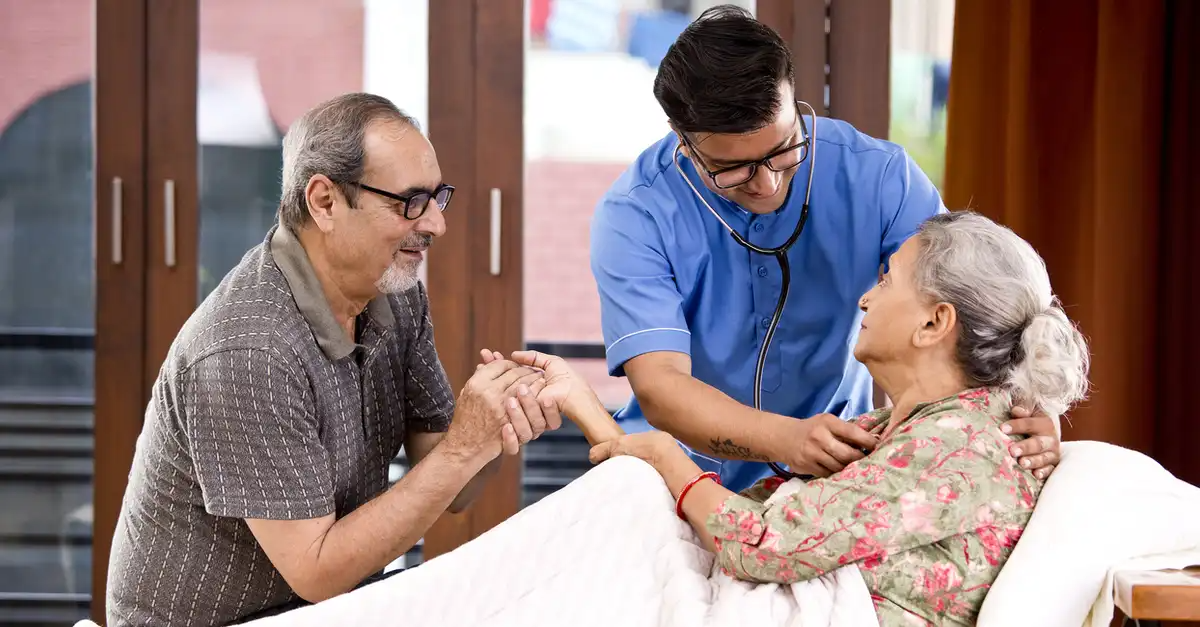
Long-term illnesses such as paralysis, neurological disorders, chronic diseases, or age-related weaknesses require continuous support. Families alone cannot manage such cases due to the amount of time, effort, and medical understanding required. Professional nurses follow a structured routine that includes vital monitoring, medication reminders, feeding support, mobility assistance, and hygiene maintenance. They also observe subtle changes in the patient’s health—something untrained caregivers may overlook—allowing early detection of complications. Their calm and trained presence brings stability to the patient’s daily life.
Elderly patients often have additional challenges, such as weak bones, memory issues, arthritis, hearing difficulties, sleep disturbances, and emotional loneliness. A professional nurse understands how to handle each of these aspects with patience and dignity. Proper posture, safe walking assistance, medication schedules, and routine check-ups help elders maintain better health. Additionally, a nurse becomes a companion, reducing the emotional burden on elders who often feel neglected or dependent. This emotional support can significantly improve their overall well-being.
Professional home nursing is also essential for bedridden patients who need constant monitoring. These patients must be repositioned regularly to prevent bed sores, kept clean to avoid infections, and supported emotionally to maintain mental stability. Nurses are trained in lifting techniques, bed positioning, pressure sore prevention, catheter management, feeding support, and airway care. Their presence ensures the patient’s dignity, comfort, and safety remain intact.
Another major benefit of professional home nursing is emergency handling. Nurses are trained to identify early warning signs like sudden fever spikes, difficulty breathing, reduced oxygen levels, unusual swelling, change in consciousness, or sharp pain. Their ability to respond quickly—either by providing first aid or coordinating hospital support—often prevents major complications. They also educate family members on symptoms to watch out for, making the entire home safer for the patient.
Hygiene and sterilization are critical parts of home nursing. Many infections occur due to improper handling of wounds, unclean surroundings, contaminated instruments, or incorrect disposal. Professional nurses follow hospital-grade hygiene standards: wearing gloves, masks, sanitizing equipment, cleaning surfaces, and maintaining sterile technique during procedures. This significantly reduces the risk of infection—especially important for diabetic, post-operative, or elderly patients.
Communication is another strength of professional home nurses. They regularly update family members about progress, highlight concerns, and coordinate with doctors when needed. This creates a structured care environment where the patient’s needs are not missed or delayed.
Many families also find that home nursing reduces overall medical expenses. Avoiding unnecessary hospital stays, reducing emergency visits, preventing infections, and improving recovery speed all contribute to financial savings. More importantly, patients feel happier, more secure, and more motivated when cared for at home.
In summary, professional home nursing is not just about performing medical tasks—it is about creating a safe, supportive, and stable recovery environment. It combines medical knowledge, discipline, hygiene, emotional support, and constant monitoring to give patients the best possible chance of recovery. In today’s busy lifestyle and increasingly fragmented family structures, home nursing has become an essential healthcare service.
Braj Dham Patient Home Care ensures that every patient receives personalized, compassionate, and skilled nursing attention, helping them recover faster and live with dignity in the comfort of their home.